Does a water softener remove chlorine? No, and here is how to get soft, fresh-smelling water
Updated November 22, 2026
A water softener does not remove chlorine or chloramine, so we install a catalytic carbon tank ahead of it on your main line, both in 1 visit, and every faucet and shower in your Miami home gets water that is soft, spotless and free of the pool smell.
- Free in-home water test
- Written quote, no pressure
- Licensed, insured installers
For your utility’s chloramine and what it does in your home, see chloramine in Miami water. This post answers one question about softeners and shows the setup we install to fix both.
Does a water softener remove chlorine? Here’s what it does remove
No. A softener removes hardness, the calcium and magnesium that leave scale, by trading them for sodium in a resin tank. Chlorine and chloramine are not hardness minerals, so the resin has nothing to grab and the disinfectant flows straight through. That is why we pair every softener on county water with a carbon stage built for the job.
The certifications spell out the split. Residential softeners are certified under NSF/ANSI 44. Chlorine and chloramine claims live under NSF/ANSI 42, a separate standard for carbon filters. Your written quote from us names both listings, so you can see which tank does which job.
| Equipment | Hardness and scale | Chlorine | Chloramine | Listing to ask for |
|---|---|---|---|---|
| Ion exchange water softener | Yes | No | No | NSF/ANSI 44 |
| Standard carbon filter | No | Yes, on listed models | Poorly, unless the listing names it | NSF/ANSI 42, chlorine claim |
| Catalytic carbon on the main line | No | Yes | Yes, when the listing names chloramine | NSF/ANSI 42, chloramine claim |
| Under-sink reverse osmosis | At one faucet only | Yes, in its carbon stages | In carbon stages rated for it | NSF/ANSI 58, plus 53 for PFOA and PFOS |
| Carbon tank plus softener | Yes | Yes | Yes | Both listings on your quote |
Why does softened water still smell like a pool, and how do we fix it?
Chloramine passes right through the resin, and a carbon tank in front of the softener takes it out. Miami-Dade adds ammonia to chlorine on purpose so the disinfectant lasts all the way to your shower, per its water quality report. The softener stops the white crust on the glass door; the carbon stops the smell coming out of the showerhead.
Once a year the county switches to free chlorine for about two weeks, as the City of Doral and the Town of Miami Lakes announce. Catalytic carbon handles both forms, so your water tastes and smells the same all year.
Why does the carbon tank go in front of the softener?
So the resin only ever sees dechlorinated water and each tank can do its one job well. Carbon first takes out the chloramine; the softener after it takes out the hardness. The water that reaches your faucets has neither the scale nor the smell.
If you already own a softener and notice spots coming back soon after it regenerates, we check the resin and the brine tank while we add the carbon stage, so you know exactly what you are getting before we leave.


What do we install? Catalytic carbon, ahead of your softener
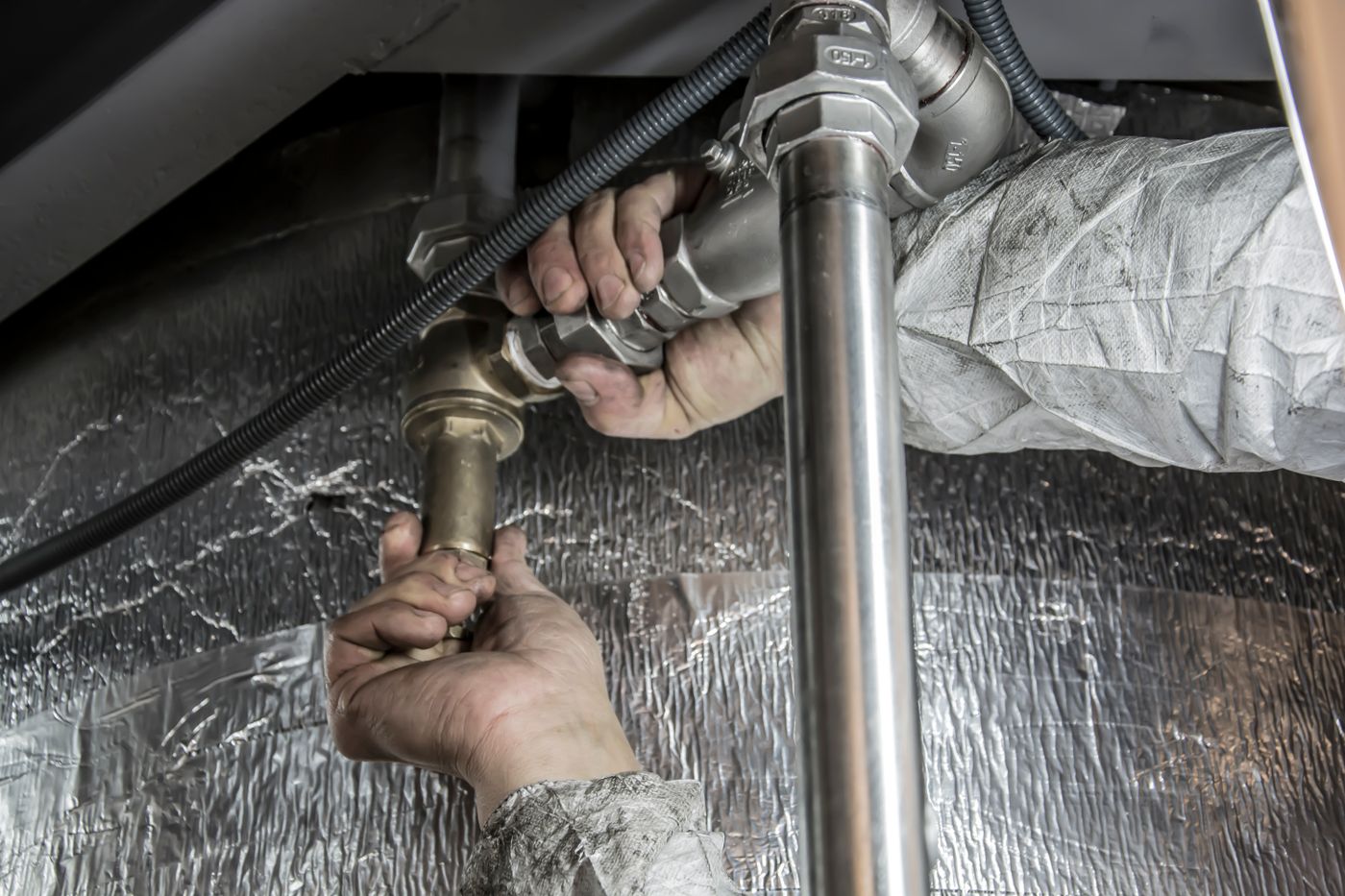
We put a catalytic carbon tank on the main line first, then the softener, so every faucet, shower, washing machine and ice maker gets water with the chloramine and the hardness taken out.
- Carbon first, softener secondThe order protects the resin and gives you both results at every tap.
- The right listingCarbon whose NSF/ANSI 42 listing names chloramine, and a softener certified to NSF/ANSI 44. Both on your written quote.
- Already have a softener?We add the carbon tank in front of it and check the resin while we’re there.
- A bypass valveSo service never means shutting off water to the whole house.
- One install, one permitOur licensed, insured installers do the plumbing, and we pull the permit.
Do you need the carbon stage on your South Florida utility?
Most likely yes: we install it for every utility in our area that disinfects with chloramine, and carbon listed for chlorine where the utility uses free chlorine. Here is where each one stands, from its own annual report.
- Miami-Dade WASD main system: chloramine. Miami, Doral, Kendall, Hialeah and Miami Beach are on it.
- City of North Miami: chloramine, per its water quality report.
- Pembroke Pines: chloramine, per its annual drinking water report.
- Hollywood-supplied Broward districts: chloramine, per the Broward water quality report.
- South Dade, Homestead and Miramar: free chlorine instead, which a softener also leaves in. We install carbon listed for chlorine there.
On a private well there’s no disinfectant, but there’s raw aquifer hardness and often iron, so the softener goes behind an iron filter. See well water treatment. Each utility sits side by side on chloramine in Miami water.
What does a carbon tank plus softener cost?
We price it to your home at a free water test and put it in writing before any work. What changes the price is your home’s size and number of bathrooms, county water or a well, whether you already own a softener we can keep, house or condo, and the permit. Installing both tanks in the same visit means one trip, one bypass loop and one permit instead of two.
Your quote lists both tanks, their listings, the labor, the permit and the yearly media and salt as separate lines. Financing may be available. More in the water softener installation guide and the Miami cost guide.
Softener and chlorine questions
Does a water softener remove PFAS?
No. The Minnesota Department of Health says softeners are not likely to remove PFAS. For drinking water we add reverse osmosis at the kitchen sink, on a model listed for PFOA and PFOS. See how to remove PFAS from tap water.
Should the carbon filter go before or after the softener?
Before. Carbon takes the chloramine out first, so the resin sees dechlorinated water and the softener can do its one job. On a private well, an iron filter also goes ahead of the softener.
Why do I get spots again soon after the softener regenerates?
Worn resin is a common cause, and a salt bridge in the brine tank is another. We diagnose it, rebed the resin if needed and add carbon ahead of it. See water filter repair and service.
How long does installation take?
Most main-line installs are done in one visit, with the carbon tank and the softener on the same line. Your written quote gives the date, and we flush and check both tanks before we leave.
Do you handle the permit?
Yes. Installing a whole-house filter or softener is plumbing work under Florida law, and Miami-Dade’s permit exemption list doesn’t exempt water treatment equipment. Our licensed installers do the work and we pull the permit.
Sources
- Miami-Dade WASD, 2025 Water Quality Report
- NSF, NSF/ANSI 42, 53 and 401 filtration standards
- Minnesota Department of Health, PFAS home water treatment
- City of Doral, WASD chlorine conversion notice (2024)
- Town of Miami Lakes, WASD chlorine conversion notice (2025)
- City of North Miami, 2024 Water Quality Report
- City of Pembroke Pines, 2024 Annual Drinking Water Quality Report
- Broward County, 2024 Water Quality Report (districts supplied by Hollywood)
- Florida Statutes 489.105
- Miami-Dade, permit exemptions
Get soft water that smells fresh at every tap
Book a free in-home water test. We show you what is in your water, quote the right system in writing, and our licensed, insured installers handle the rest, permit included.