
Miami water quality, explained, and how we bring clean water to every tap
Updated November 22, 2026
Miami water quality, explained in plain words from your utility’s 2025 report: what reaches your tap, which stage of our home filtration takes care of each part, and how a free in-home water test shows exactly what your home needs.
- Free in-home water test
- Written quote, no pressure
- Licensed, insured installers
- Free in-home water test
- Licensed, insured installers
- Permits handled for you
- We service what we install
How should you read your water report?
As a list of jobs for a home filter. The county’s plants soften and disinfect the water; what’s left when it reaches your tap is what our systems handle. Below, each part of the report gets a plain-words explanation and the stage we install for it. For a longer walk-through, read what’s in Miami tap water, line by line.
PFAS: what the report shows, and how we filter it out
We filter PFAS out of your drinking water with certified reverse osmosis at the kitchen sink. The main system’s 2025 report lists PFOS at 33 ppt, and the county has found PFAS in its supply “from the start of the testing,” in its own words in a November 2023 county memo. Your utility is working toward the federal rule; a filter at home works now.
What it means in your home: PFAS has no color, taste or smell, so nothing tells you it’s there. It’s in every glass you pour, every pot of rice and every tray of ice from the tap until something filters it out.
How we get it out: we install under-sink reverse osmosis at your kitchen sink, on a model whose NSF/ANSI 58 or 53 certification names PFOA and PFOS, and we tie in the fridge and ice maker line where it reaches. In a Duke study reported by the Miami Herald, under-sink RO was the home option that performed best on PFAS, while activated carbon was inconsistent. We show you the certification before we install, and we change the membrane and cartridges on schedule so it keeps working. More on PFAS in Miami water.
Pure drinking water at your sink, installed in one visit
A drinking water system under your sink usually goes in during a single visit. We test your water free, put the price in writing, and our licensed, insured installers do the work.
Chloramine: how do we take the pool smell out of every tap?
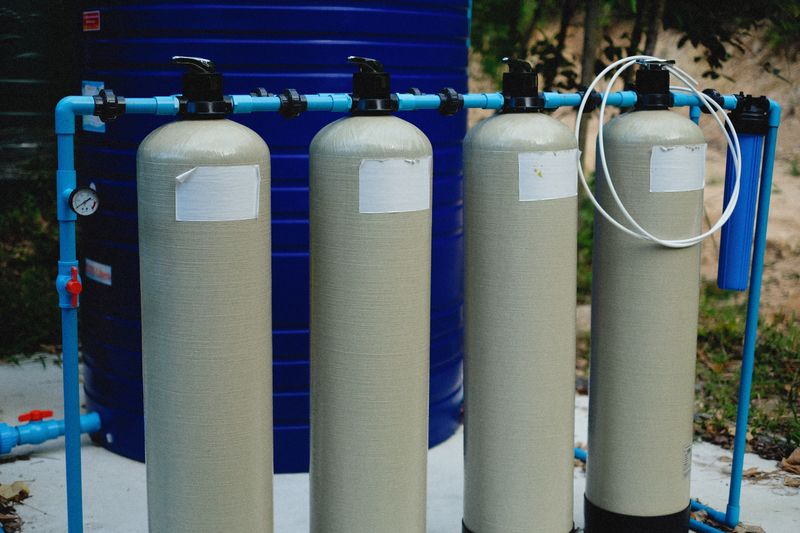
With whole-house catalytic carbon on your main line. The main system averaged 2.5 ppm chloramine in 2025. The plants disinfect with chlorine, then add ammonia to turn it into chloramine, a slower disinfectant built to last through miles of pipe. It’s designed to still be there when it reaches your faucet, and it is.
Once a year, usually in late summer or fall, the county switches the main system to free chlorine for about two weeks to clean the pipes. The county’s notices (2024, 2025) tell customers they may notice a chlorine taste or odor, and warns dialysis patients and aquarium owners to get advice.
What it means in your home: the pool smell when you step into a hot shower, the chemical edge in coffee, tea and ice, and a pitcher filter that never quite gets the taste out. It doesn’t fade on its own, because it was built not to.
How we get it out: we install a whole-house filter with catalytic carbon on your main line, so every faucet, shower and appliance runs without it. Ordinary carbon was made for free chlorine and handles chloramine poorly, so we use catalytic media certified to NSF/ANSI 42 for chloramine and size the tank to your household’s flow. It keeps working through the yearly switch. More on the pool smell in Miami water.
Disinfection byproducts: how do we reduce them?
With the same whole-house carbon that takes out chloramine, plus reverse osmosis for drinking water. Byproducts form when disinfectant reacts with natural organic matter in the water, so they build after the water leaves the plant; the main system averaged 50 ppb total trihalomethanes in 2025.
Free chlorine reacts faster than chloramine, so byproducts can climb during the yearly switch, especially at the far ends of the pipe network.
What it means in your home: byproducts come out of every tap and showerhead along with the disinfectant that forms them.
How we get it out: the carbon on your main line reduces them at every tap, and RO at the kitchen sink covers drinking water. We install media certified to NSF/ANSI 53 for the byproducts it claims, and we show you that listing in your quote.
Hardness: how do we stop the white scale?
With a softener or salt-free conditioner sized to a reading at your tap. Raw Biscayne Aquifer water is very hard, about 13.7 grains per gallon from calcium alone in a USGS study (our arithmetic), and the county’s reports don’t publish hardness at the tap, so we measure it.
On a private well there’s no plant at all. Raw aquifer water arrives at full hardness, often with iron, so we put an iron filter first.
What it means in your home: the white crust on glass shower doors, faucets and dark tile that’s back a day after you scrub it, cloudy glasses out of the dishwasher, showerheads that lose their flow, and scale building inside kettles, coffee makers, ice makers and water heaters where you can’t see it.
How we get it out: we measure hardness at your faucet during the free water test, then install a salt-based softener certified to NSF/ANSI 44 that removes the hardness minerals, or a salt-free conditioner designed to keep them from sticking as scale. On a well, we put an iron filter ahead of the softener. Most Miami houses pair scale control with whole-house carbon in one install. See hard water and white scale in Miami and the softener vs conditioner comparison.
Lead and copper: how do we handle what your own plumbing adds?
With certified reverse osmosis at the kitchen sink. Lead and copper don’t come from the aquifer. They enter tap water from older pipes, solder and fixtures inside your home or building, after the water leaves the county’s mains. That’s why the county samples for them at household faucets, and why a county average can’t tell you what’s coming out of your own tap. EPA’s health goal for lead is zero.
What it means in your home: a countywide sample can’t tell you what your own pipes add to your glass. Only a test at your faucet can, and the water you drink and cook with is where it counts.
How we get it out: we install reverse osmosis at the kitchen sink on a model whose NSF/ANSI 58 or 53 certification names lead, so the water you drink and cook with runs through the membrane whatever your building’s pipes add. In a condo it goes in under the sink with no change to the building’s main line. More on lead in Miami water and condo filters.
Nitrate and salt: how do we treat water in South Dade and near the coast?
With reverse osmosis, which handles both. South Dade covers the county’s farm belt, and its system reported nitrate at 7 ppm in 2025. Florida’s health department warns that nitrate is dangerous for infants under six months.
Near the coast, the USGS has mapped saltwater moving inland in south Miami-Dade, which can change how well water tastes. On a private well, Florida’s health department “strongly recommends” testing for bacteria and nitrate at least once a year.
What it means in your home: if you mix formula with tap water in the Redland, Homestead or anywhere south of SW 248th Street, nitrate is the number to know. Near the coast, dissolved salts change how your water tastes.
How we get it out: we install reverse osmosis certified to NSF/ANSI 58 for nitrate reduction, and the same membrane takes out dissolved salts. On a well, we build the system from your test results, with UV for bacteria where the test calls for it. See well water treatment.
Where does Miami’s water come from, and where do our systems pick up?
Our systems pick up where the plant stops. Almost all of the water comes from the Biscayne Aquifer, a shallow layer of porous limestone under the county. WASD pumps it from wells that average about 80 feet deep, per the county’s water supply page. Shallow means what happens on the surface reaches the wells, which is why the county tests them for PFAS every quarter.
| Plant | Water source | Part of the county it serves | Treatment |
|---|---|---|---|
| Hialeah plant | Biscayne Aquifer | North of SW 8th Street to the Broward line, shared with Preston | Lime softening, disinfection, filtration, air stripping |
| John E. Preston plant | Biscayne Aquifer | North of SW 8th Street to the Broward line, shared with Hialeah | Enhanced lime softening, disinfection, filtration, air stripping |
| Alexander Orr plant | Biscayne Aquifer | SW 8th Street south to SW 248th Street | Lime softening, disinfection, filtration |
| Hialeah reverse osmosis plant | Brackish Upper Floridan Aquifer, about 1,400 ft deep | Jointly owned with the City of Hialeah; 7.5 million gallons a day; opened 2013 | Membrane treatment |
| South Dade system (five smaller plants) | Biscayne Aquifer | South of SW 248th Street, on separate pipes | Free chlorine instead of chloramine |
Read the treatment column. Lime, disinfectant and a filtration step for particles. Nothing on the list is aimed at PFAS, and then chloramine is added on purpose for the trip through the pipes.
What it means in your home: the water at your tap is disinfected, with PFAS left in, chloramine added, byproducts formed on the way, and whatever sand or pipe scale the mains send along.
How we get it out: our systems pick up where the plant stops. A sediment prefilter catches sand and rust, catalytic carbon takes out chloramine and byproducts, scale control handles the minerals, and reverse osmosis at the kitchen sink filters PFAS out of your drinking water. We size each stage to your home.
How do our five stages clean your water?
Each stage between the street and your glass has one job, and we size each stage to your home and your water. In a condo we fit the last two at your sink. A house on a well usually gets all five, plus UV.
Sediment prefilter
Catches sand, rust and pipe flakes before they reach the rest.
- Sand
- Rust
Catalytic carbon
Built for chloramine, which ordinary carbon handles poorly.
- Chloramine
- Byproducts
- Taste
Scale control
A softener or conditioner for spotless glass and fixtures.
- Scale
- Spots
Reverse osmosis
A fine membrane at the kitchen sink for drinking and cooking water.
- PFAS
- Lead
- Nitrate
Remineralizer
Adds back a little calcium and magnesium so RO water tastes right.
- Taste
What’s in the water where you live, and what do we install there?
Your water depends on your utility, not your ZIP code, and we match the system to it. Six of our eight service areas get WASD water in some form, and Homestead and Hollywood run their own plants.
| Area | Utility and plant | Disinfectant | PFOS, latest figure |
|---|---|---|---|
| Miami | WASD main system. Hialeah and Preston plants north of SW 8th Street, Orr plant south of it | Chloramine, 2.5 ppm | 33 ppt (2025) |
| Kendall | WASD main system, Alexander Orr plant | Chloramine, 2.5 ppm | 33 ppt (2025) |
| Hialeah | City of Hialeah, buying mostly WASD water plus the jointly owned Hialeah RO plant | Chloramine on WASD water | Mostly WASD water; see Miami |
| Coral Gables | Coral Gables homes are generally on Miami-Dade WASD water; the name on your water bill confirms it | Chloramine if on WASD | 33 ppt if on WASD (2025) |
| Homestead and Redland | City of Homestead (own wells); WASD South Dade system south of SW 248th Street; private wells | Free chlorine: 1.5 ppm Homestead, 1.3 ppm South Dade | Homestead: not reported. South Dade: 32 ppt (2025) |
| Doral | WASD main system, north of SW 8th Street | Chloramine, 2.5 ppm | 33 ppt (2025) |
| Miami Beach | Buys all of its water from WASD | Chloramine | 33 ppt, WASD main (2025) |
| Hollywood, FL | City of Hollywood plant: lime and membrane softening of Biscayne water, plus RO of Floridan water | Chloramine, 2.9 to 3.4 ppm (2024) | 20 to 22 ppt (2024) |
Hollywood runs its own plant and also uses chloramine, so the fix there is the same. Homestead doesn’t report PFAS, so the free test at your faucet is how you get a number.
What it means in your home: wherever you live from Hollywood to Homestead, the two big problems are the same: chloramine in every tap and PFAS in every glass. On a private well, add hardness, iron, sulfur and bacteria after floods.
How we get it out: we match the system to your utility’s report and your free water test. In most homes that means catalytic carbon on the main line and reverse osmosis at the kitchen sink. On a well, it means a system built from your test results.
What’s the best water filter for a Miami home?
The one matched to what’s in your water. Here is what we install for each line of the report, and the certification we show you before we start. Certification is product and contaminant specific.
| The problem | What we install | Certification we show you | Service |
|---|---|---|---|
| Chloramine | Whole-house catalytic carbon on the main line | NSF/ANSI 42, naming chloramine | Whole-house filtration |
| PFOS and PFOA | Under-sink reverse osmosis | NSF/ANSI 58 or 53, naming PFOA and PFOS | Reverse osmosis |
| Trihalomethanes and haloacetic acids | Carbon for every tap; RO for drinking water | NSF/ANSI 53, naming them | Whole-house filtration |
| Lead and copper from home plumbing | Reverse osmosis at the kitchen sink | NSF/ANSI 58 or 53, naming lead | Condo and under-sink filters |
| White scale from hard water | Salt-based softener or salt-free conditioner | NSF/ANSI 44 for softeners | Water softeners |
| Nitrate in South Dade | Reverse osmosis | NSF/ANSI 58, naming nitrate | Reverse osmosis |
| Well water: hardness, iron, sulfur, bacteria | Iron filter, softener, aeration and UV, built from your test | NSF/ANSI 44 and 55 where they apply | Well water treatment |
| An old system that stopped working | New media, cartridges or membrane | The original model’s listing | Repair and filter changes |
On county water in a house, the system we install most is whole-house catalytic carbon plus reverse osmosis at the kitchen sink: chloramine and byproducts out of every tap, PFAS and lead out of every glass. Add scale control if you see white crust. In a condo, we start with under-sink RO.
Which system fits your home?
We install three main setups. Every quote is free and written before any work starts. Financing may be available.
-
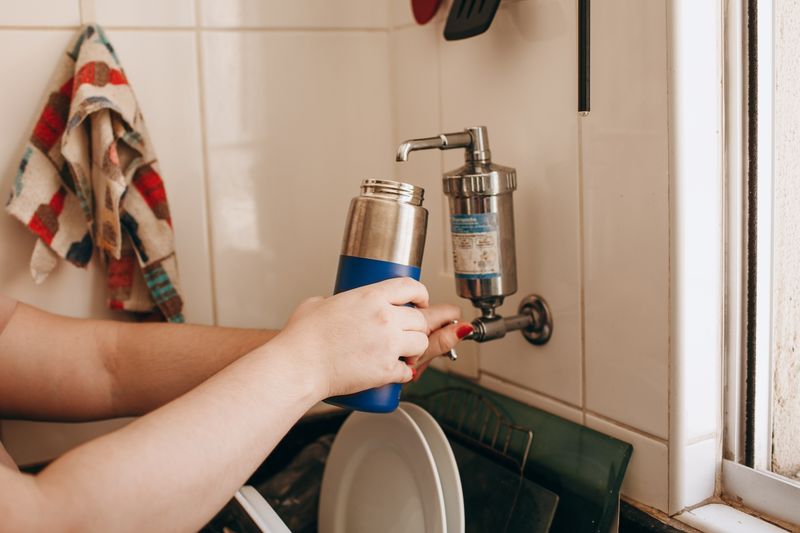
Drinking water system
Condos and renters
Under-sink reverse osmosis for the water you drink and cook with.
- Filters out PFAS, lead and nitrate
- Fits under most kitchen sinks
- No change to the building’s main line
What changes the priceYour home’s size, water source and which stages you need. We put it in writing after your free water test.Quote a drinking system -
Whole-house filtration
Best for houses
Catalytic carbon on the main line for every tap, shower and appliance.
- Takes out chloramine and byproducts
- Works through the yearly chlorine switch
- We handle the permit
What changes the priceYour home’s size, water source and which stages you need. We put it in writing after your free water test.Quote whole-house -
Whole-house plus RO
Complete protection
Carbon for the house and reverse osmosis at the kitchen sink. Our most common setup on county water.
- Chloramine out of every tap
- PFAS filtered out where you drink
- One install, one permit
What changes the priceYour home’s size, water source and which stages you need. We put it in writing after your free water test.Quote complete protection


How does our service work? We test it, install it and service it
One call gets you the whole job, from the first water test to the filter changes years later.
- Free in-home water testWe test your water at your tap and walk you through what’s in it.
- Free written quoteThe system and the price in writing before we touch a pipe.
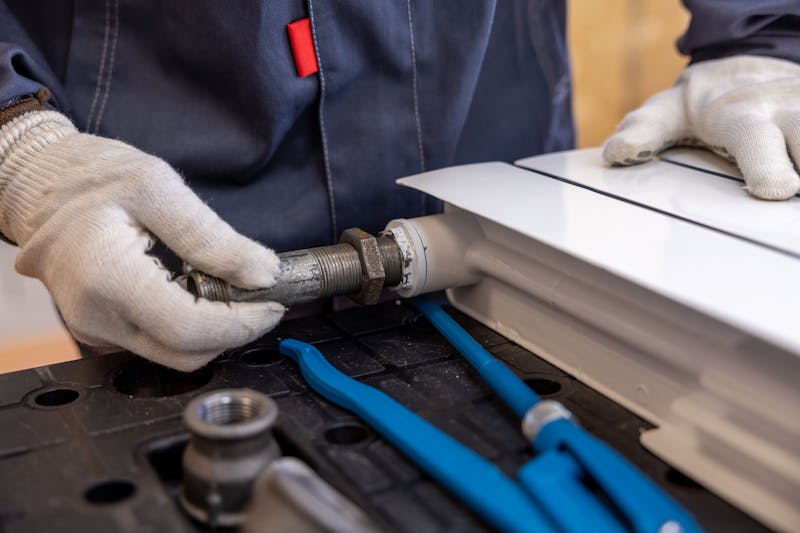
- Licensed, insured installersPutting a system on your main line is plumbing work under Florida law, so our licensed plumbers do it.
- We handle the permitMiami-Dade’s permit exemptions don’t cover water treatment equipment. We pull it for you.
- We service what we installFilter changes, membrane swaps and repairs from the team that put it in.
- Financing may be availableAsk when you book your free water test.
What do Miami homeowners ask about their water?
What’s in Miami tap water?
The county’s 2025 report lists PFAS such as PFOS and PFOA, chloramine used as the disinfectant, and the byproducts it forms. Our systems take care of each one: catalytic carbon for chloramine and byproducts at every tap, and certified reverse osmosis for PFAS at the kitchen sink.
What’s the best water filter for a Miami home?
On county water in a house, the system we install most is whole-house catalytic carbon for chloramine and byproducts, plus under-sink reverse osmosis certified for PFOA and PFOS at the kitchen sink. Add a softener if you see white scale. In a condo, we start with under-sink RO. Your free water test tells us which fits. Whole-house filtration.
How much does whole-house filtration cost in Miami?
We give you a free written quote after your in-home water test. What changes the price: your home’s size, your water source, which stages you need, condo or house, the permit and your maintenance plan. Financing may be available. What decides your price.
Do you handle the permit and service what you install?
Yes to both. Florida treats a whole-house system as plumbing work, and Miami-Dade’s permit exemption list doesn’t include water treatment equipment, so our licensed, insured installers pull the permit as part of the job. After the install, we change your filters and membranes and handle any repairs. Why homeowners choose us.
Which problem do you want fixed?
- PFAS in Miami waterHow we filter PFAS out
- The pool smellHow we take chloramine out of every tap
- Hard water and white scaleHow we stop it
- Lead in Miami waterWhat your pipes add, and the fix
- Water filtration cost in MiamiWhat decides your price
- What’s in Miami tap water: 6 things left in your glassThe long read
- Miami’s PFAS deadline is 2029 or laterWhy a filter at home makes sense now
Sources
- Miami-Dade WASD, 2025 Water Quality Report
- Miami-Dade WASD, Water supply and treatment
- Miami-Dade WASD, 2024 Annual Report
- Miami-Dade Board of County Commissioners, PFAS memo, November 2023
- Miami Herald, April 12, 2024 (Duke study on home filters)
- USGS, Water-Resources Investigations Report 91-4009 (Biscayne Aquifer water quality)
- USGS, Saltwater intrusion in the Biscayne Aquifer, Miami-Dade County
- City of Doral, WASD chlorine conversion notice, September 2024
- Town of Miami Lakes, WASD chlorine conversion notice, October 2025
- City of Miami Beach, Drinking water
- City of Homestead, 2024 Water Quality Report
- City of Hollywood, 2020 Water Supply Plan Update
- Broward County Water and Wastewater Services, 2024 Water Quality Report
- Florida Department of Health, Private wells
- Florida Department of Health, Are you well aware (nitrate and infants)
- Miami-Dade County, Permit exemptions list
- NSF, NSF/ANSI 42, 53 and 401 filtration standards
Start drinking cleaner water this week
Book a free in-home water test. We show you what is in your water, quote the right system in writing, and our licensed, insured installers handle the rest, permit included.