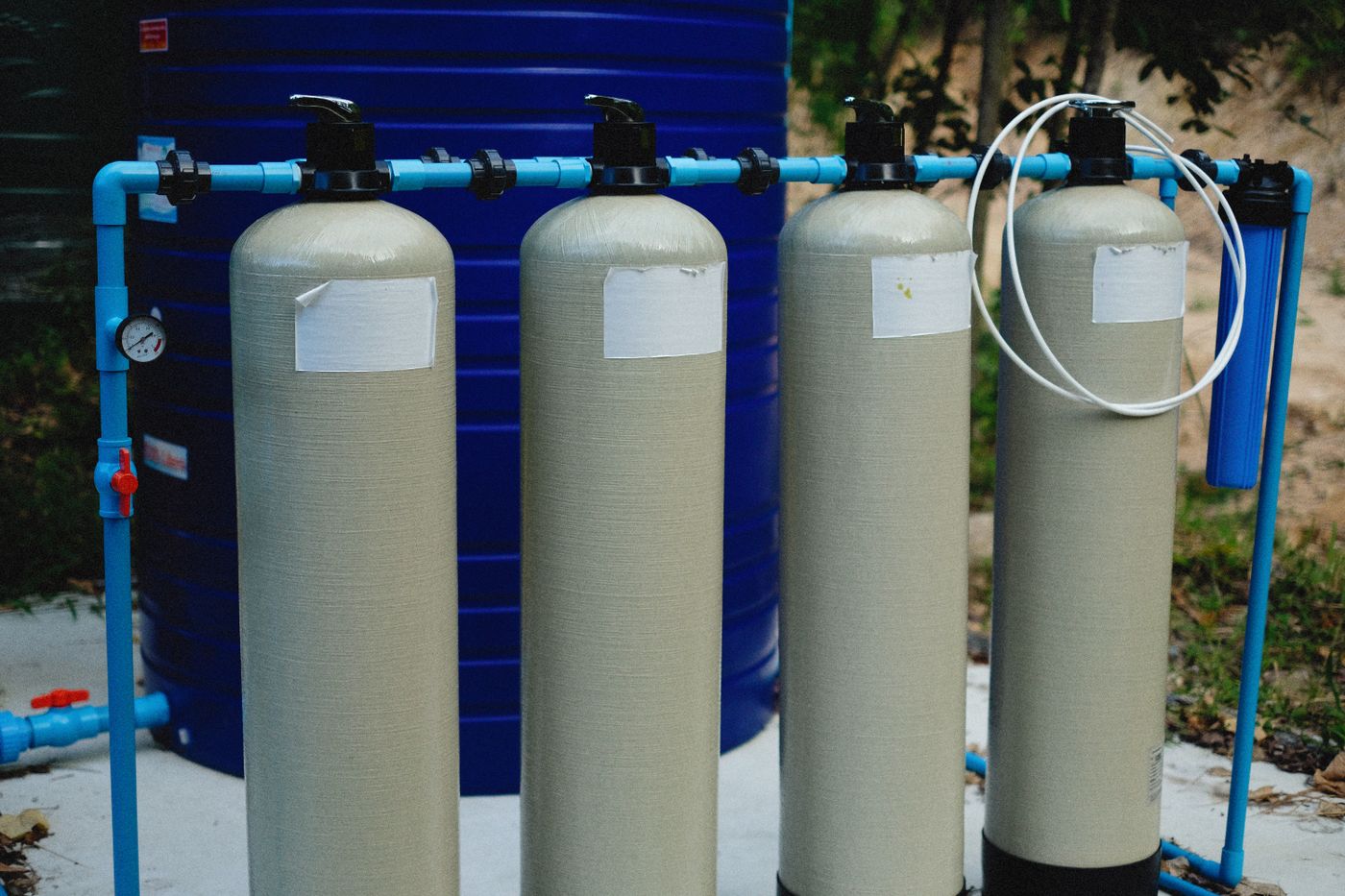
Well water treatment in Miami-Dade: clear, clean, odor-free water from your own well
We install well water treatment for homes in Redland, Homestead and Southwest Ranches, a stage-by-stage train of sediment, iron and sulfur, softener, UV and kitchen RO certified to NSF/ANSI 58, built from a free test of your well, with the permit and service handled.
- Free in-home water test
- Written quote, no pressure
- Licensed, insured installers
- Free in-home water test
- Licensed, insured installers
- Permits handled for you
- We service what we install
What does our well water treatment do?
It does the job a treatment plant would: we test your well, then install one stage for each problem the test finds, between the pressure tank and the house, so every faucet, shower and appliance gets clear, clean water. A private well pumps raw Biscayne Aquifer water that is naturally hard and often carries iron (USGS), and after a flood bacteria can follow.
Florida DOH “strongly recommends” testing a private well for bacteria and nitrate at least once a year (Florida DOH), and nobody treats your well water but you. That’s the job we take on: licensed, insured installers, permit handled, and we service what we install. Most of our well work is in Redland and the acreage around Homestead; see Homestead and Redland.
Which stages are in a well treatment train, and what does each one do?
Each stage handles one problem and protects the next. We build the train from your results and size every stage to your flow.
Sediment filter
Catches sand and grit from the well so nothing downstream fouls.
- Sand
- Grit
Aeration or oxidizing filter
Air or an oxidizer turns iron and sulfide into particles a filter bed traps and backwashes away.
- Sulfur
- Iron
Softener
Takes out raw aquifer hardness, after the iron is out so the resin stays clean.
- Hardness
- Scale
UV disinfection
Ultraviolet light treats bacteria in clear water, so it goes last on the main line.
- Bacteria
Reverse osmosis
At the kitchen sink for drinking and cooking water.
- Nitrate
- Salt
- PFAS
Which stage fixes each well problem?
Match what you notice to the stage we install and the certification on the model. Your written quote names which result each stage is there for.
| What you notice or we find | Stage we install | Certification on the model |
|---|---|---|
| Rotten-egg smell | Aeration or an oxidizing filter | Matched to the sulfide level in your test |
| Orange stains on sinks and laundry | Oxidizing iron filter ahead of the softener | Rated for iron at your level |
| White scale and crusty fixtures | Softener sized to your hardness | NSF/ANSI 44 |
| Bacteria after a flood or failed test | UV on the main line | NSF/ANSI 55 |
| Nitrate, salt or PFAS in drinking water | RO at the kitchen sink | NSF/ANSI 58, listed for each |
| Sand and grit | Sediment filter first | Sized to your flow |
How do we fix rotten-egg smell and orange stains?
With aeration or an oxidizing filter for the smell, and an oxidizing iron filter ahead of the softener for the stains, chosen by the levels in your test. The smell is hydrogen sulfide; UF/IFAS lists shock chlorination as the most common treatment (UF/IFAS), and for a smell that keeps coming back, continuous aeration or oxidation is the lasting fix. More on the rotten-egg smell.
Orange stains are iron. Taking it out before the softener keeps the resin clean and the stains off sinks, toilets, tubs and white laundry. More on iron stains. If your well is near the coast, we also test chloride, since saltwater has been moving inland under south Miami-Dade (USGS); salt calls for reverse osmosis at the drinking tap.
What do we do for your well after a flood or hurricane?
We reset the system and retest, and a UV stage keeps treating the water from then on. After heavy rain, DOH in Miami-Dade issues well-water advisories (DOH-Miami-Dade); treat the well before you drink from it again.
Florida DOH’s flooded-well steps include shutting off the pump, removing filter cartridges and membranes, shock-chlorinating the well, then backwashing softeners and iron filters and flushing the lines (DOH). A certified lab test confirms the result. If you already have equipment, we check or replace the media and cartridges after the flood and put the next test on your calendar.

What changes at home with treated well water?
We install between the pressure tank and the house, so every faucet, shower and appliance gets the result.
- No rotten-egg smellAeration or an oxidizing filter takes the sulfur out before it reaches the shower.
- No orange stainsSinks, toilets, tubs and white laundry stop picking up iron.
- No white scaleA softener keeps crust off fixtures and scale out of your water heater, so they last longer.
- Bacteria treated every dayA UV stage treats every gallon of clear water on its way into the house.
- Drinking water handledRO at the kitchen sink for nitrate, salt and PFAS, on a model listed for each.
- No more hauling bottled waterCook, drink and make ice from your own tap again, which beats any pitcher or jug.
What is included, and how do the free well test and install work?
Installing treatment on a water supply line is plumbing work in Florida (FS 489.105), and Miami-Dade’s permit exemption list doesn’t cover it. So our licensed, insured installers do the work, we pull the permit, and most trains go in within a day.
Free in-home water test
We test iron, hardness, hydrogen sulfide, pH and dissolved solids at your tap and walk you through the results. For bacteria, nitrate or PFAS, we collect samples for a certified lab and put any lab fee in writing first.
Free written quote
Each stage, what it treats, its certification, where it mounts by the well tank, where backwash drains, and one total price. Nothing gets installed that your test doesn’t call for.
Install day
Our installers plumb the train in order and flush each stage, then show you the bypass and backwash settings.
We handle the permit
Miami-Dade County in unincorporated areas like Redland, the City of Homestead inside city limits, and the right Broward office for Southwest Ranches. We file and schedule the inspection.
Service and yearly retest
UV lamp changes, iron media, softener salt settings and a yearly well test, on a schedule we track. How our testing works.
Full-time well homes
The whole train, with RO at the kitchen sink. Pair it with a softener sized to your hardness.
Irrigation-only wells
Usually just sediment and iron control to keep stains off pavers and walls.
Homes on county water too
If the house is on county water and the well is for irrigation, see point-of-use filters for the kitchen.
How much does well water treatment cost in Miami-Dade?
Your well test and written quote are free, and the price is in writing before any work, with each stage priced separately. What changes it most:
- What your test finds: iron, sulfur, hardness, bacteria, nitrate and salt each add a stage only if present.
- Flow: house size, irrigation, livestock or a nursery set the equipment size.
- Layout: the distance from the well to the house and where backwash can drain.
- Permit: county or city, included.
Financing may be available; ask when we quote. See the Miami water filtration cost guide for how each system is priced.
Well water questions from Redland, Homestead and Southwest Ranches
How often should I test my well?
Florida DOH recommends testing for bacteria and nitrate at least once a year, and after any flood. We include a yearly retest in our service plan.
How much does well water treatment cost?
It depends on what your test finds, how many stages you need, your flow and layout, and the permit. We test free and give you a written quote with each stage priced before any work. Financing may be available.
Does well treatment remove PFAS?
Reverse osmosis at the kitchen sink, on a model listed for PFOA and PFOS, handles PFAS in drinking water. A lab panel tells you whether your well has it. PFAS in Miami water.
Why does the softener go after the iron filter?
Iron fouls softener resin. Taking it out first keeps the resin working and lasting, so the softener only has to handle hardness.
Related pages
- Homestead and RedlandWhere most of our well work is
- Rotten egg smellHydrogen sulfide and how we fix it
- Iron stainsOrange marks on sinks and laundry
- Water softenersFor raw well hardness
- Reverse osmosisDrinking water on a well
- Water testingYour well, tested free
Sources
- USGS, Biscayne Aquifer water quality study
- USGS, Saltwater intrusion in the Biscayne Aquifer
- Florida DOH, Private wells
- Florida DOH, Are You Well Aware
- Florida DOH, flooded well guidance, 2020
- DOH-Miami-Dade, flooding advisory for well owners, June 2024
- UF/IFAS, Private well FAQ
- Town of Southwest Ranches, wells and septic
- WLRN, Water shortage warnings, February 2026
- Miami-Dade, Permit exemptions list
- Florida Statutes 489.105
- NSF, filtration system standards
Enjoy clear, clean water from your own well this month
Book a free in-home water test. We show you what is in your water, quote the right system in writing, and our licensed, insured installers handle the rest, permit included.