What’s in Miami tap water? A plain-language guide to clean, great-tasting water at every tap
Updated November 22, 2026
We explain what’s in Miami tap water in plain language, test your own tap free in 1 visit, then install the right stage for each item, catalytic carbon, scale control and reverse osmosis, so every shower, faucet and glass in your home gives you clean, great-tasting water.
- Free in-home water test
- Written quote, no pressure
- Licensed, insured installers
What’s in Miami tap water when it reaches your glass?
Six things worth knowing, and each one has a stage we install for it. This is the plain-language walkthrough: what each item is, what you notice at home, and what takes it out. For the full county data, plant by plant and utility by utility, see our Miami water quality guide. Live in the city itself? See water filtration in Miami, FL, neighborhood by neighborhood.
Miami-Dade draws its water from the Biscayne Aquifer and disinfects it at the plant, per the county treatment page. Filtering it to your taste at home is our job. Here is the list, with what we install for each:
- PFOS. A PFAS compound listed in the county report. Reverse osmosis under your kitchen sink, on a model listed for it.
- PFOA. Same family. The same reverse osmosis stage, listed for PFOA.
- Chloramine. The disinfectant, added on purpose; the pool smell in your shower. Catalytic carbon on the main line.
- Trihalomethanes. Byproducts that form when disinfectant meets natural organic matter. Carbon rated for them.
- Haloacetic acids. A second byproduct family. The same carbon stage.
- Hardness. Calcium from the limestone aquifer that leaves scale. A softener or conditioner.
PFOS and PFOA: what are they, and how do we filter them out?
We filter them out with reverse osmosis at your kitchen sink. What they are: industrial compounds from the PFAS family that don’t break down easily. Miami-Dade lists both in its annual water quality report, a county memo confirms its well testing has detected PFAS, and utilities have until 2029 to meet the new federal limits, per Florida DEP.
What it means at home. PFAS has no color, taste or smell, so you can’t tell by drinking. The simple step is a filter listed for it where you drink and cook: every glass, pot of rice, tray of ice and cup of coffee.
How we fix it. We install reverse osmosis under your kitchen sink with its own drinking water faucet, and we show you the model’s NSF/ANSI 58 or 53 listing that names PFOA and PFOS before you sign. The EPA names reverse osmosis among the home methods that reduce PFAS.
What you get. Clean drinking water where you drink and cook, starting this month. The full timeline is in the Miami-Dade PFAS 2029 deadline, and every utility is on PFAS in Miami water.
What is chloramine, and how do we get the pool smell out?
Chloramine is the county’s disinfectant, and a catalytic carbon tank on your main line takes it out. The county disinfects with chlorine at the plant, then adds ammonia to form chloramine, which lasts all the way to your showerhead. Once a year it switches to free chlorine for about two weeks, and the county’s notice says customers may notice a chlorine taste or odor.
Our whole-home catalytic carbon, the media built for chloramine, goes where water enters your house, so every shower, sink, washer and ice maker gets filtered water. No pool smell. Coffee and ice that taste right, all year.

What are trihalomethanes and haloacetic acids, and what reduces them?
They are disinfection byproducts, and the same carbon stage that takes out chloramine reduces them. When disinfectant reacts with natural organic matter in the water, it forms byproducts, and they keep forming in the pipes after the plant. The county reports both families each year, and towns that buy county water, like Surfside, post their own monitoring notices.
How we fix it. Whole-home carbon rated for these byproducts reduces them at every tap, and the carbon stages inside our under-sink RO systems add a second pass at the kitchen.
| What’s in it | What you notice | What we install to take it out |
|---|---|---|
| PFOS | Nothing; no taste or smell | Under-sink RO whose NSF/ANSI 58 or 53 listing names PFOS |
| PFOA | Nothing; no taste or smell | The same RO stage, listed for PFOA |
| Disinfectant | Pool smell in the shower, chlorine taste in coffee | Whole-home catalytic carbon (NSF/ANSI 42, chloramine named) |
| Trihalomethanes | Usually nothing | Carbon rated for them, plus RO carbon stages |
| Haloacetic acids | Usually nothing | Carbon rated for them, plus RO carbon stages |
| Nitrate | Nothing | Under-sink RO listed for nitrate |
| Hardness | Spots, crust, scale in the water heater | Softener (NSF/ANSI 44) or salt-free conditioner, sized to our test |
Hardness: how do we stop white scale on everything?
We measure hardness at your tap and install a softener or conditioner sized to it. What it is: dissolved calcium and magnesium from the limestone aquifer. The county report does not print a hardness figure, and USGS sampling puts raw Biscayne Aquifer water in the very hard range.
What it means at home. A white film on glasses out of the dishwasher, crust on showerheads and faucet aerators, spots on shower glass, and scale settling in tank and tankless water heaters.
How we fix it. A salt-based softener certified to NSF/ANSI 44 or a salt-free conditioner on the main line. Most houses pair it with the carbon tank, so one install handles chloramine and scale together. The details are in is Miami water hard? and on water softener installation.
What about lead and copper from your own pipes?
We check your plumbing at the water test and can add reverse osmosis listed for lead. The six items above come from the utility. Lead and copper come from a building’s service lines, solder and fixtures, which is why the county samples them at customers’ taps instead of at the plant.
No countywide number tells you what’s in the pipes between your riser and your faucet. Our technicians look at your plumbing during the water test, and the under-sink RO systems we install are available on models whose NSF/ANSI listing names lead. More on lead in Miami water.
If your water simply tastes off, metallic or flat, start with bad-tasting water in Miami. The cause is usually one of the items on this page.
Which stage takes out which item?
We size each stage to your home and your water test. A condo may need only the last two. A house on county water usually gets all five.
Sediment prefilter
Catches sand, rust and pipe flakes before they reach the rest.
- Sand
- Rust
Catalytic carbon
Built for chloramine, which ordinary carbon handles poorly.
- Chloramine
- THMs
- HAAs
Scale control
A softener or conditioner for the scale hard water leaves.
- Scale
- Spots
Reverse osmosis
A fine membrane at the kitchen sink for drinking and cooking water.
- PFOS
- PFOA
- Lead
Remineralizer
Adds back a little calcium and magnesium so RO water tastes right.
- Taste
Is the list different if you’re not on county water?
The details change by utility, and we fit the same stages to each. Every utility publishes its own annual report, like North Miami, Broward County and Homestead, and side-by-side tables are in our Miami water quality guide.
On a private well the list is different and nobody tests it for you, so we start with a lab test. Wells commonly bring a rotten-egg smell from hydrogen sulfide, iron staining and hardness, and the Florida Department of Health recommends yearly bacteria and nitrate testing. See rotten-egg smell, iron stains and well water treatment.
How do you find out what’s in your own glass?
With our free in-home water test. One visit tells you what’s in your own water. We put the system and the price in writing before any work, and our licensed, insured installers do the rest.
- We test at your tapHardness, pH and chlorine on the spot, read side by side with your utility’s latest report.
- Free written quoteThe system, the stages, the NSF/ANSI listings and the price, on paper.
- We handle the permitMiami-Dade’s permit exemption list doesn’t cover water treatment equipment, so we pull it.
- We service what we installFilter changes and service visits after the install, from the same team.
- Financing may be availableAsk about it at your water test.
What’s the best water filter for a Miami home?
The one matched to your water. On county water, that’s usually whole-home carbon plus kitchen RO. What changes the price: home size, county water or a well, which stages your test calls for, house or condo, and the permit. Every quote is free and in writing.
-
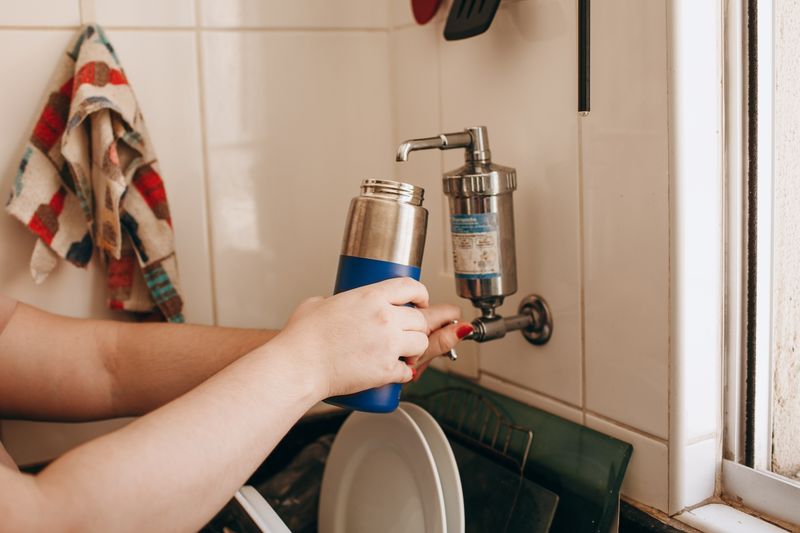
Drinking water system
Condos and renters
Under-sink reverse osmosis for the water you drink and cook with.
- Filters out PFOS and PFOA on a listed model
- Fits under most kitchen sinks
- No change to the building’s main line
Free written quotePriced to your kitchenQuote a drinking system -
Whole-home filtration
Best for houses
Catalytic carbon on the main line, so every tap, shower and appliance gets filtered water.
- Takes out chloramine and its byproducts
- No pool smell in the shower
- Permit handled by us
Free written quotePriced to your home sizeQuote whole-home -
Whole-home plus RO
Complete protection
Carbon for the house and reverse osmosis at the kitchen sink. The common setup on county water.
- Chloramine out of every tap
- PFAS filtered out where you drink
- One install, one permit
Free written quotePriced to your home and testQuote complete protection


How we price every system is in the Miami cost guide. See also whole-house filtration, reverse osmosis, condo filters and why Miami homeowners choose us.
Miami tap water questions
How do I get PFAS out of my water?
Reverse osmosis under the kitchen sink, on a model whose NSF/ANSI 58 or 53 listing names PFOA and PFOS. That’s what we install for PFAS. It covers the water you drink and cook with, and it doesn’t wait on the county’s timeline.
Does boiling Miami tap water remove PFAS?
No. Boiling is the county’s instruction for germs during a boil-water notice. It does nothing for PFOS and PFOA, and nothing for chloramine in the shower. Reverse osmosis at the kitchen sink is the home system that takes PFAS out of your drinking water.
Will a pitcher or fridge filter handle Miami water?
Most are built for chlorine taste, and the main system uses chloramine, which ordinary carbon handles poorly. Few are certified for PFOA and PFOS. If the exact model’s NSF/ANSI listing doesn’t name what’s in your water, it isn’t built for it. We show you the listing on every system we install.
How long does installation take?
Most whole-house installs are done in one visit, and under-sink RO is usually part of a day. We schedule around you, and in a condo we work to the building’s hours.
Do you handle the permit?
Yes. Florida treats tying equipment into your main line as plumbing work, and Miami-Dade’s permit exemption list doesn’t include water treatment equipment. Our licensed installers pull the permit, and it’s part of your written quote.
Do you service what you install?
Yes. We set the filter and media schedule when we install, put the yearly cost on your quote, and come back for changes and service. One company from water test to the next cartridge.
Sources
- Miami-Dade WASD, 2025 Water Quality Report
- Miami-Dade WASD, 2023 Water Quality Report
- Miami-Dade WASD, Water supply and treatment
- Florida DEP, PFAS (updated June 16, 2026)
- US EPA, Reducing PFAS in your drinking water with a home filter
- Miami-Dade County, PFAS memo (November 2023)
- City of Doral, WASD chlorine conversion notice (2024)
- Town of Surfside, disinfection byproducts public notice (October 2025)
- USGS, Water-Resources Investigations Report 91-4009 (Biscayne Aquifer water quality)
- City of Homestead, 2024 Water Quality Report
- City of North Miami, 2024 Water Quality Report
- Broward County, 2024 Water Quality Report
- Florida Department of Health, Private wells
- NSF, NSF/ANSI 42, 53 and 401 filtration standards
- Miami-Dade County, Permit exemptions
Find out what’s in your water and enjoy cleaner water this week
Book a free in-home water test. We show you what is in your water, quote the right system in writing, and our licensed, insured installers handle the rest, permit included.